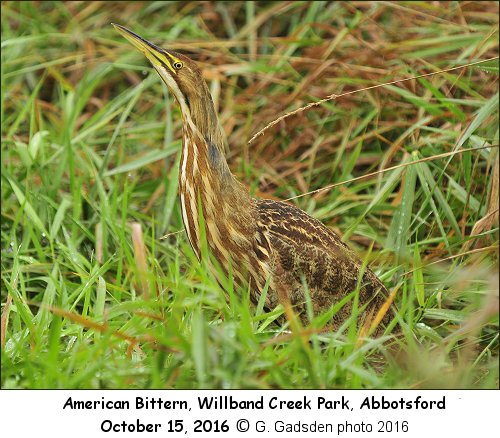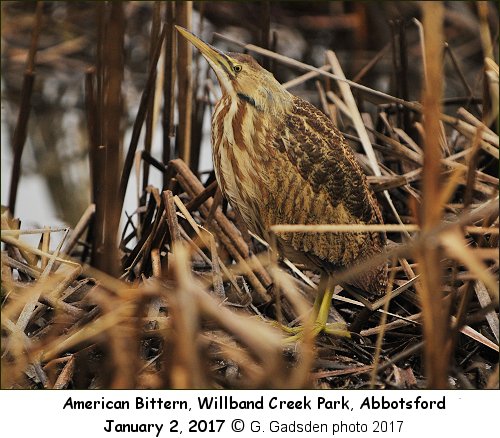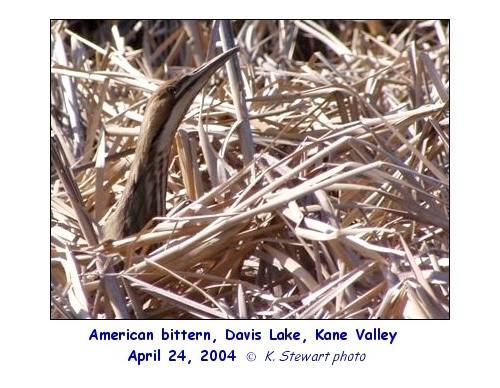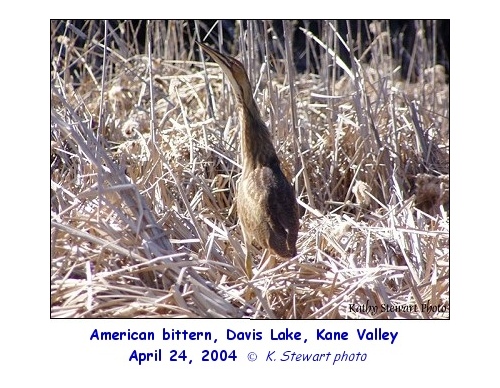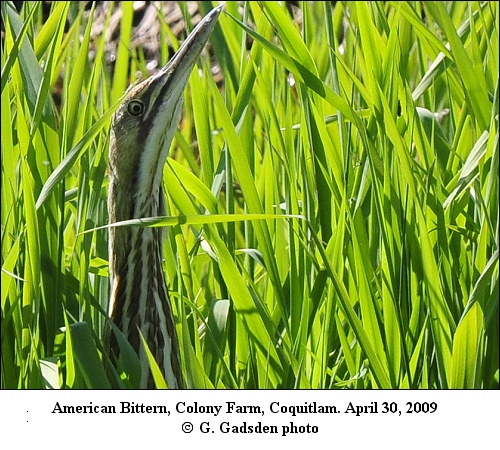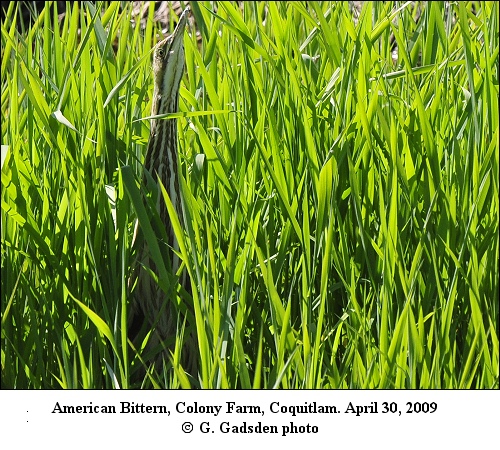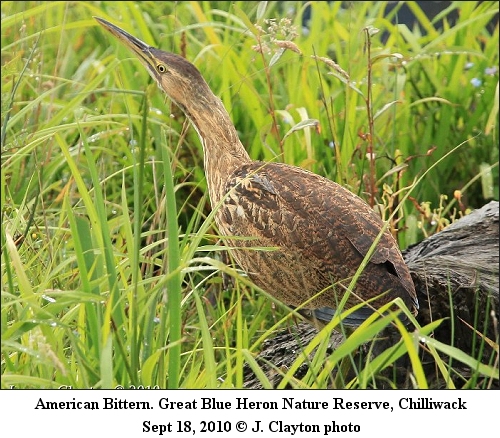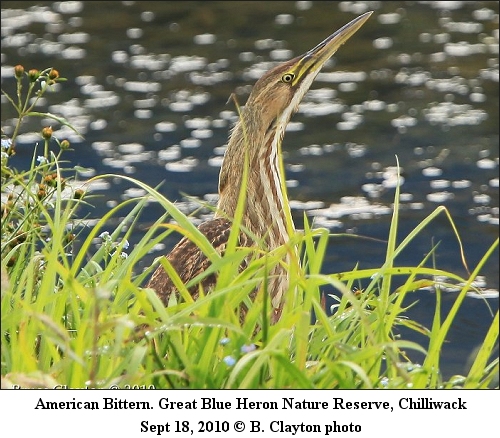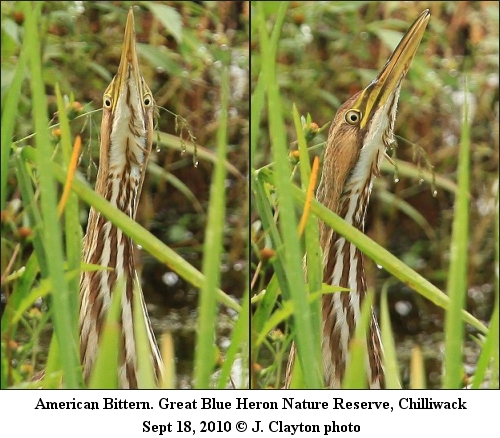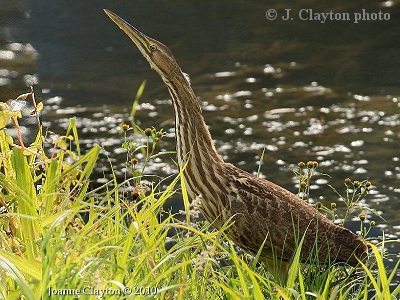

This small heron is larger in size compared to Green Herons but is found in similar habitat. Fairly secretive with great camoflage; they are no doubt more common in marshy habitats but are often over-looked. However, reports of the species have seemed to become less regular over recent times.
Listen for their distinctive “BLOONK-Kadunk” song during breeding season. Small numbers remain on the coast during the winter but most migrate further south. Like other herons, will eat most anything it can fit into its mouth such as, but not limited to, amphibians, small mammals, bird nestlings and fish. Has been observed, while hiding in the grass, to sway with the breeze to apparently mimic the surrounding moving grass (G. Gadsden, J & B Clayton pers. observations)
Similar species:
A juvenile Green Heron could make one look twice. Look for the smaller size and darker body on a Green Heron. Video and photographs are below.
Sources:
Ehrlich, Dobkin and Wheye, (1988)
Noteworthy Data
Date | Location | Source(s) | Comments |
| December 23, 2005 | Cheam Sumas Cent Rd, Chilliwack | B. Thomas | One in a ditch along grass field. |
| September 5, 2001 | Kent Prison, Agassiz/Kent | U. Freed, G. Gadsden | Two immatures rescued from being trapped in an enclosure. Released at Cheam Lake Wetlands after short rehab at local wildlife rescue. |
Photos