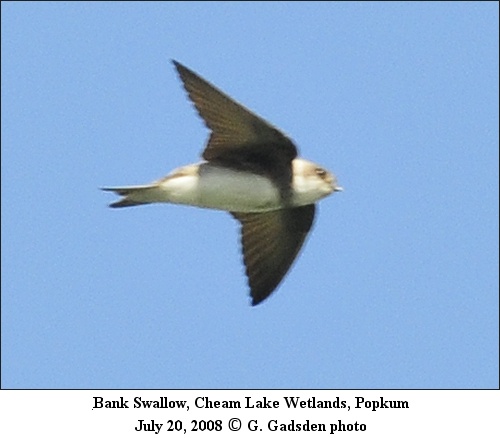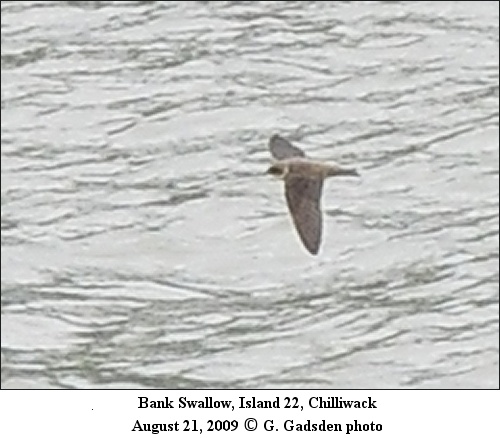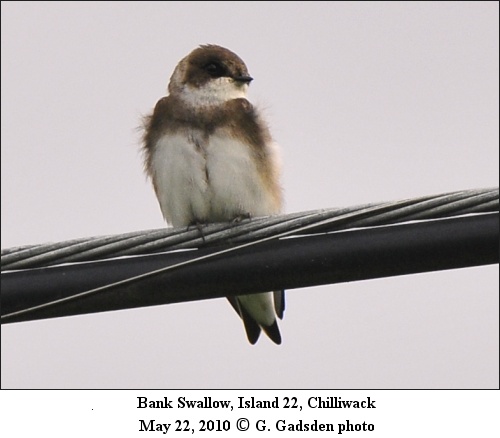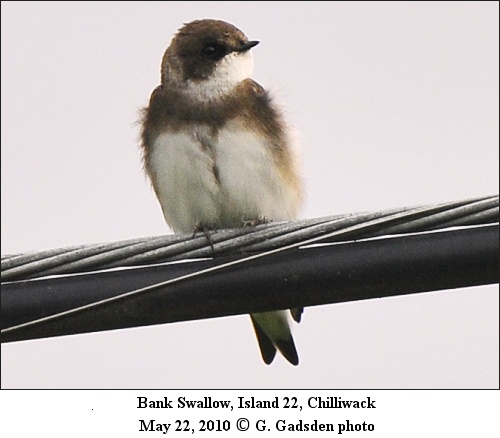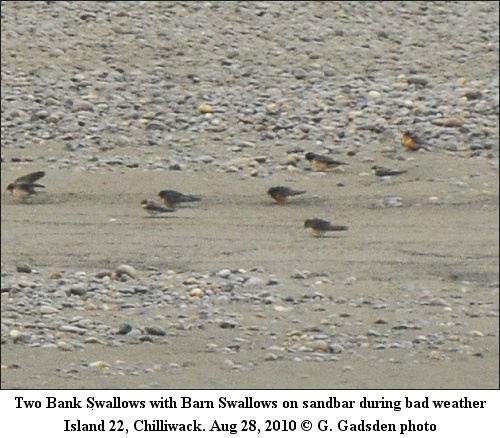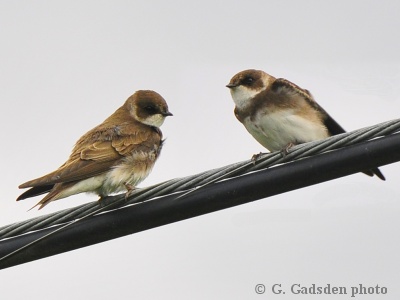

Our smallest swallow, slightly smaller than Violet-green Swallows. A mostly migratory visitor to our checklist area but has recently been recorded breeding in Hope. Nests in burrows up to 1 meter dug by the pair in banks consisting of softer soil. Nests in colonies. Migrates to South America for the winter. Feeds exclusively on insects, rarely on the ground. Feeding behaviour on the ground was recently documented in the checklist area.
Similar species:
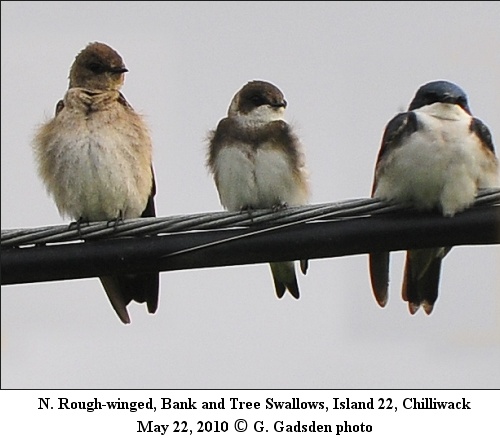
Northern Rough-winged Swallows are also brown but much larger, with brown throats and dusky bellies. In flight, Bank Swallows have a paler brown rump and back that contrasts with darker brown wings, upper back and head. Northern Rough-winged Swallows display plain brown backs, wings and head that do not contrast. Watch for Bank Swallow’s fast and flicking wingbeats on thin and pointed wings as compared to other swallow species’ smoother and stronger appearing flight patterns. Bank Swallow’s long, notched tail also a good fieldmark. Beware of young Tree Swallows that can be a drab greyish-brown.
Best viewing locations:
Regularly seen from Island 22 Regional Park especially in late August to middle-late September among flocks of other swallow species. Watch for them also during this time among large flocks of swallows in other areas.
Sources:
Ehrlich, Dobkin and Wheye, (1988)
Noteworthy Data
Date | Location | Source(s) | Comments |
| 24-Sept-2010 | Island 22, Chilliwack | G. Gadsden | Latest sighting on record. |
| 28-Aug-2010 | Island 22, Chilliwack | G. Gadsden | Several on sandbar appearing to feed off the ground with other swallow species during wind and rain. |
| 20-July-2008 | Cheam Lake Wetlands, Popkum | G. Gadsden | Adult feeding a juvenile on the wing. |
| 12-June-2004 | Coquihalla River, Hope | T. Manson | Nesting along the bank of the Coquihalla River. |
Photos