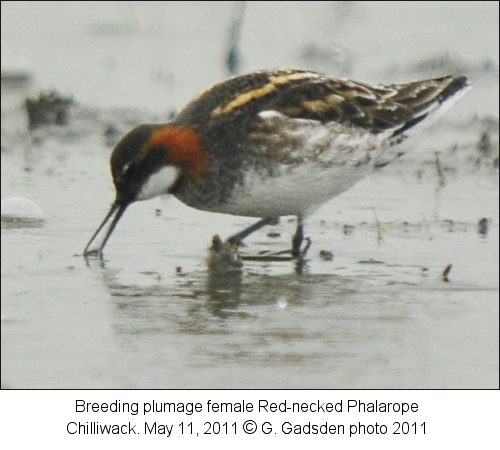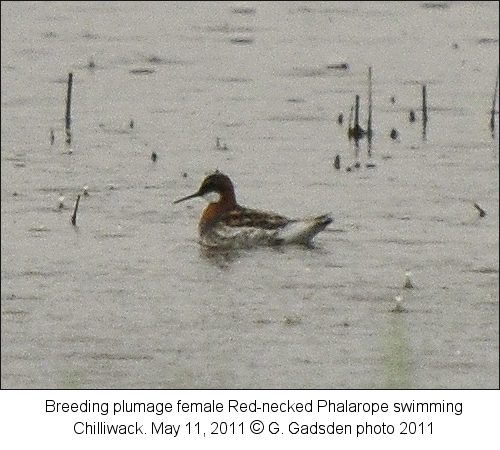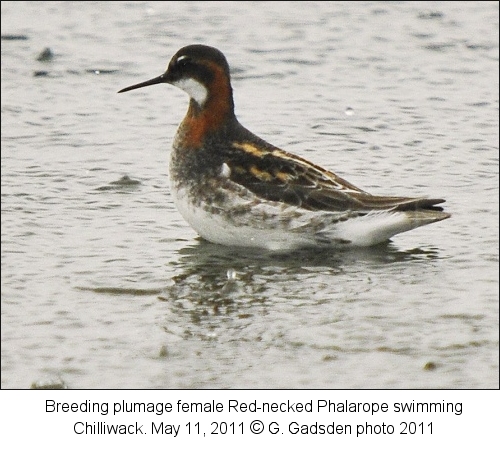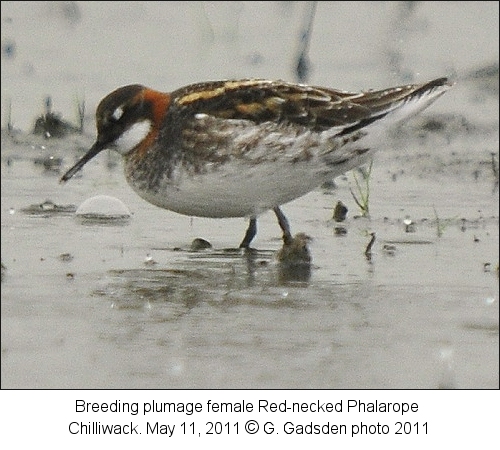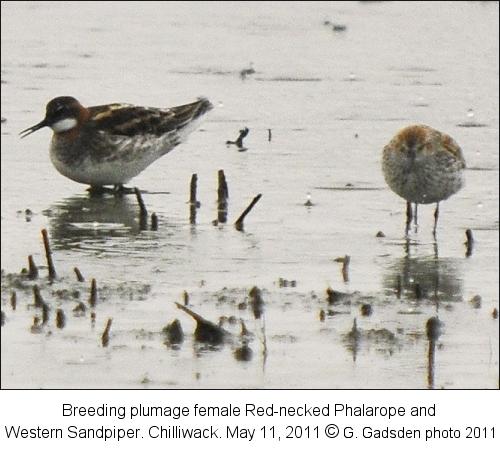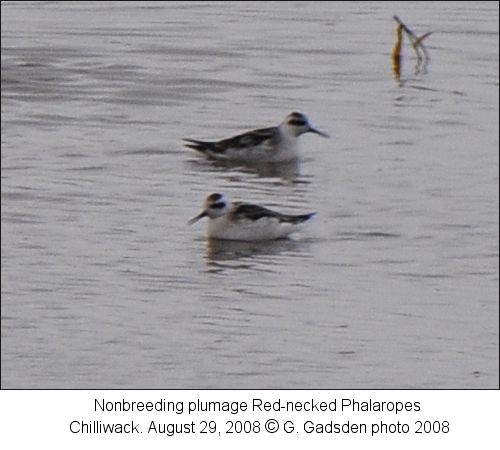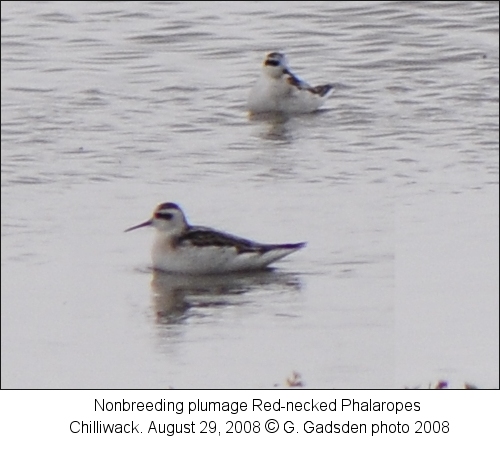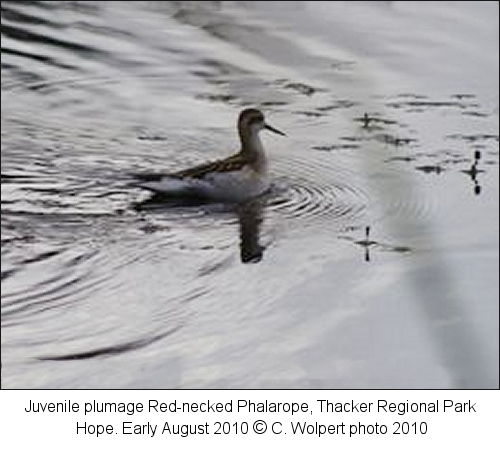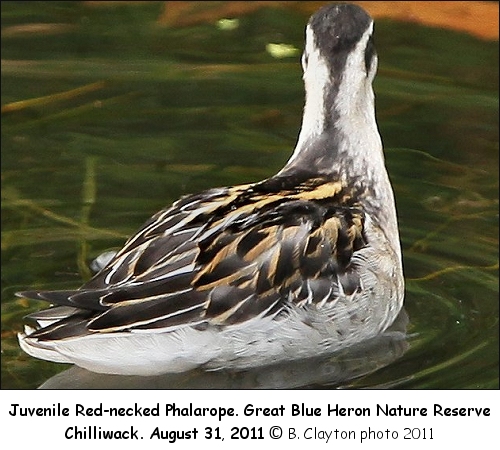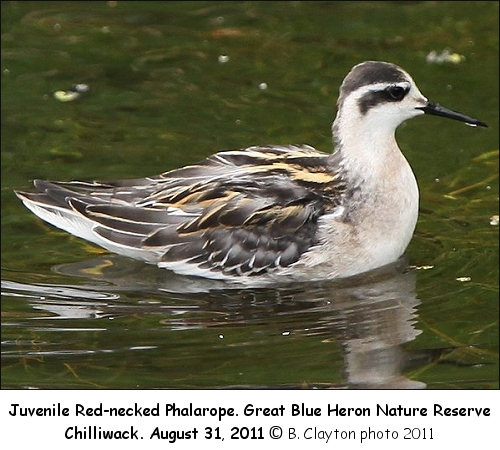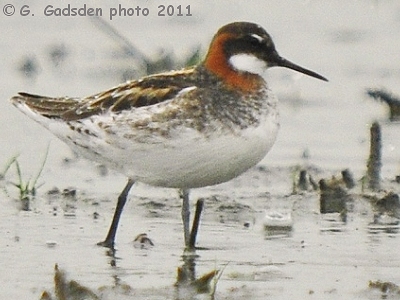

Phalaropes are unique shorebirds in part that they have lobed toes. These toes, and buoyant feathering on their breasts, help them as they enjoy swimming about much like a small duck. They will also often spin rapidly in the water which causes an upwelling that brings small food particles, such as small aquatic insects, to the surface within easy reach. In phalaropes, females are larger and, in breeding colours, much more brightly coloured than males. Nesting also goes against the norm. Females lay their eggs, but the leave the incubating and raising of the young to the male. Breeding takes place along the edges of tundra ponds to the north. Migration is when we are likely to see this species as they travel between their breeding grounds and their wintering grounds which is offshore in the open ocean off the coast of South America. Due to their pelagic habits, they have salt glands to enable them to drink salt water; another unique phalarope trait in shorebirds. Most records we have are from August and they have been seen in habitats anywhere from small ponds in a flooded field to Harrison Lake far from shore.
Similar species:
In breeding colours, quite easily identified. In non-breeding colours, might look similar to other phalaropes in similar plumage. The markings on their backs, face and size and shape of bill are good field marks to look at.
Sources:
Ehrlich, Dobkin and Wheye, (1988)
Noteworthy Data
Date | Location | Source(s) | Comments |
| August 31, 2011 | GBHNR, Chilliwack | B & J Clayton 2011 D. Peppar 2011 | A juvenile at the Great Blue Heron Nature Reserve observed by several observers into the evening. Photographed. |
| May 11, 2011 | Chilliwack | G. Gadsden 2011h C. McDonald 2011g | Female in breeding plumage in flooded field Chilliwack Central Rd. Photographed and seen by several other birders thoughout the afternoon. |
| September 09, 2010 | Harrison Lake | G. Gadsden 2010f | Non-breeding plumage out on lake ranging 300 to 500 meters from shore. |
| August 10, 2010 | Thacker Park, Hope | C. Wolpert, 2010 | Juvenile swimming in marsh. Photographed. |
| August 29, 2008 | Chilliwack | G. Gadsden 2008j | Two non-breeding adults in flooded field Sinclair Rd. Two birds seen at the same location on August 30, 2008 (G. Gadsden, B & J Clayton). |
| Middle August 2001 | Cheam Lake Wetlands, Popkum | S. Cannings 2001 | Juvenile bird feeding in Cheam Lake. |
Photos